The system in question was generating every day. Looking at its generation graph showed a perfectly normal solar curve. As such, there was no reason for anyone to be suspicious. Once the system was onboarded to Diagno, red flags were immediately being waved. The historical site data, back to 2021, was loaded and we checked performance for the whole period. It showed cascading drops, and the system at the time of analysis was operating at about 70% of what we’d expect, which for its 99.5kWp total meant there was at least 20kWp in the air. This string fault amounts to more than a typical residential system!
The owner had never been alerted to how bad the underperformance was.
The string fault was not new
Diagno analysed the system historical data and found that the first drop happened in 2021.
Three Fronius inverters showed sustained string-level underperformance, with a distinct string fault recorded in October 2021, May 2023 and April 2024. In isolation each of these faults might’ve appeared like a one-off problem to be addressed later. As time went on, the story became one of a seriously ailing system that needed someone to take a look.
Rough estimates put the cumulative losses at ~$12,200 over the five years. But with all the faults compounded, each further year was going to add another $3,500 to that total.
The maintenance choice was obvious at this point. Fix it. This wasn’t a brief dip or a small dropout. There was now a significant gap in what the system should’ve been delivering and what it actually was generating.
A directed inspection found the issue
The client arranged a technician to go have a look. Diagno armed that technician with exact serial numbers for the problematic inverters and which strings we expected to show a problem.
Initial readings showed three inverters producing approximately 9 kW, 12.5 kW and 13 kW at peak, while a fourth was producing 20.5 kW. Testing found four strings with no current: two on the first inverter and one on each of the second and third inverters.
One fault involved a smashed panel and a blown fuse. Because the fuse was blown, a leak to earth on the panel wasn’t flagged by the inverter alarms. The remaining affected strings had blown string fuses. The damaged panel and fuses were replaced, and insulation-resistance testing across the strings, panels and cabling returned results above 80MΩ.
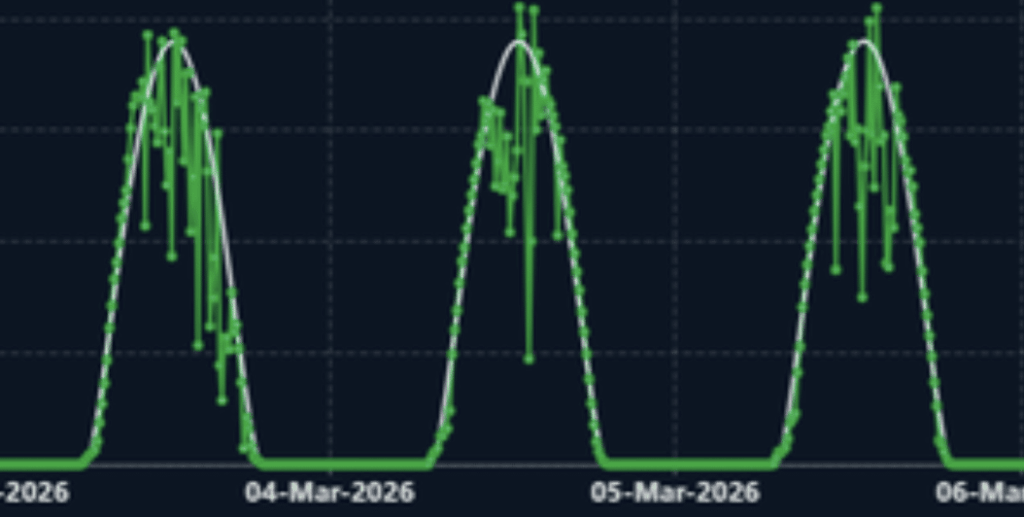
After rectification, the first three inverter readings increased to approximately 16.5 kW, 17 kW and 18 kW at peak. The fourth remained at 20.5 kW. Diagno’s post-work monitoring confirmed that system performance had been restored.
Generation does not mean performance
The system had been diligently generating for 5 years. It was enough to fool a cursory glance at the power curve. The whole time, there was an invisible chunk of power that was being left on the table. Not only that, a smashed panel carries its own risks! When a panel is broken or damaged, the worry goes a lot further than lost generation. It’s possible this client was saved from a far greater headache because they rectified the issue.
Monitoring for uptime is not enough. Whether inverters and strings are performing to expectation becomes a revenue problem, but it can be more than that. And catching equipment damage immediately instead of 5 years later makes warranty and defect-liability claims much less stressful.
In this case, Diagno performed a full historical analysis to find a compounded string fault, translated it into understandable terms and quantified its impact. The technician was armed with the context to direct their investigation, verify our findings and fix the issue.